2014年10月14日火曜日

Biological monitoring in Tokyo (October 14, 2014)

Biological monitoring at Tokyo Tower Aquarium.

  I visited Tokyo Tower Aquarium to see biological impacts of Fukushima No.1 nuclear power plant accident. Though I have visited various places in Japan to see the health consequence of the accident, I have never found any effect against creatures in Japan.
 Tokyo Tower Aquarium, founded in 1978, is the first aquarium of the unique aquarium fish collection. It exists in the Foot Town of Tokyo Tower. Beautiful and rare fish, salt water tropical fish are classified according to their original habitats: North and South Americas, Europe, Africa, Asia, Oceania and Japan. As one of the largest aquariums in the world, it is the home of some 50,000 fish in 900 different species. The 500 square meter glass tank is displayed in a spacious 825 square meter aquarium. Admire the beautiful varieties of shapes and colors of fish while calming music plays in the background.
 So I visited Tokyo Tower Aquarium to see effects of the accident against water creatures which are grown up by Japanese food and water. 
 Fortunately, I could see them grown up safely and I couldn't find any impact of the accident. It seems that there is no problem for childbirth and child-rearing in Tokyo Japan.
Posted by Yoshitaka Kiriake from Japan on (October 14, 2014) 


東京タワー水族館は観賞魚専門の水族館で900種類の観賞魚50000匹を飼育し、その規模は世界有数である。特にピラニアとアフリカン・シクリッドのコレクションが豊富である。


Long‐fin carp
ヒレナガゴイ
Long‐fin carp


Tokyo Tower
Tokyo Tower

About Tokyo Tower


Tokyo Tower map

Google map


About Tokyo Tower Aquarium
 Tokyo Tower Aquarium


Many ringed pipefish
Doryrhamphus muliannulatus
メニーリングド パイプフィッシュ
Doryrhamphus muliannulatus

Marbled lungfish (albino)
Protopterus aethiopicus (albino)
プロトプテルス・エチオピクス(アルビノ)
Protopterus aethiopicus (albino)

Spotted Knifefish (albino)
Chitala ornata (albino)
スポッテッド・ナイフフィッシュ(アルビノ)
Chitala ornata (albino)

Spotted Knifefish
Chitala ornata
スポッテッド・ナイフフィッシュ
Chitala ornata

Semicircle angelfish (Child)
Pomacanthus semicirculatus
サザナミヤッコ
Pomacanthus semicirculatus

Semicircle angelfish (Adult)
Pomacanthus semicirculatus
サザナミヤッコ
Pomacanthus semicirculatus


Humpback Grouper, Panther Grouper
Chromileptes altivelis
サラサハタ
Chromileptes altivelis


Neon Velvet Damsel, Bluestreak Damselfish
Neoglyphidodon oxyodon
ネオンダムセル
Neoglyphidodon oxyodon

Durban hinge beak shrimp
Rhynchocinetes durbanensis
スザクサラサエビ
Rhynchocinetes durbanensis

Blue jelly fish
ブルージェリー
Blue jelly fish

Discus
ディスカス
Discus

Pristobrycon striolatus
ストリオラータス・ピラニア
Pristobrycon striolatus

Serrasalmus rhombeus
ブラック・ピラニア
Serrasalmus rhombeus

Pygocentrus ternezi
ジャイアントイエロー・ピラニア
Pygocentrus ternezi

Serrasalmus sp.
ピラニア(シングー川)

Elongated Piranha
Serrasalmus elongatus
ピラニア・エロンガータ
Serrasalmus elongatus

Red bellied Piranha
Pygocentrus nattereri
ピラニア・ナッテリィ
Pygocentrus nattereri

Black Piranha
Serrasalmus rhombeus
ブラック・ピラニア(ベレン)
Serrasalmus rhombeus

Pristobrycon calmoni
イエロー・ピラニア
Pristobrycon calmoni

Cichla temensis
キクラ・テメンシス
Cichla temensis

Astronotus ocellatus
オスカー
Astronotus ocellatus

Cichlasoma peasei
パーセイ
Cichlasoma peasei

Redtail catfish
Phractocephalus hemioliopterus
レッドテールキャット
Phractocephalus hemioliopterus

Alligator gar
Atractosteus spatula
アリゲーター・ガー
Atractosteus spatula

Tambaqui
Colossoma macropomum
ブラックコロソマ
Colossoma macropomum

Kissing gourami
Helostoma temmincki
キッシンググラミー
Helostoma temmincki

Asian arowana
Scleropages formosus
アジアアロワナ(スーパーレッド)
Scleropages formosus

Snakehead
Channa argus
ライギョ(カムルチー)
Channa argus

Giant Red Tail Gourami
Osphronemus laticlavius
レッドフィン・オスフロネームスグーラミー
Osphronemus laticlavius


African Cichlids

ELECTRIC BLUE HAP 
Sciaenochromis fryeri
アーリー
Sciaenochromis fryeri

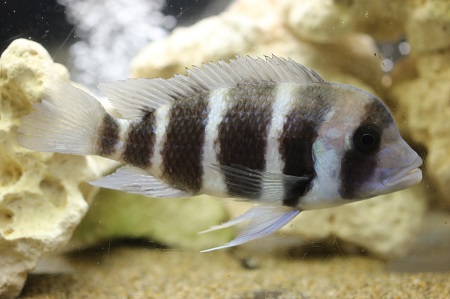
Cyphotilapia frontosa
フロントーサ
Cyphotilapia frontosa

Blue dolphin cichlid
Cyrtocara moorii
モーリー
Cyrtocara moorii

Paratilapia polleni
ポレニイ
Paratilapia polleni


Zojoji temple
増上寺

About Zojoji temple
Google map

Sangedatsumon (Main Gate) of Zojoji temple
Sangedatsumon (Main Gate)

Daiden (Hondo : Main Hall )
Amida Buddha
Amida Buddha


Japanese foods are good and safe.
Because of stricter food safety law by Japanese government, we have no worry about foods.


Parfait
Parfait

Cake
cake

Dorayaki ; Japanese dessert consisting of two slices of kasutera (sponge cake) with red bean jam in between
Dorayaki


 About 3 and a half years have passed since Fukushima Daiichi nuclear power plant accident. I have visited various places of Japan to see the health consequence of the accident.
 Fortunately I have never found any impacts by the accident among Japanese creatures. As far as I know, nobody has health problem which is caused by the accident in Japan.
 Our Prime Minister Abe assures that "The situation is under control. The influence of the contaminated water is completely blocked within Fukushima. There are no health-related problems until now and there will never be health problems." He also said that "Tokyo is 250 kilometers away from Fukushima, and the kind of danger that you imagine does not exist in Tokyo. Tokyo is a very safe city."
 As PM Abe said, Tokyo is very far away from Fukushima, people in Tokyo have no concern about the nuclear power plant accident. People in Tokyo have already forgotten the accident, because they think radioactive materials cannot reach there.
 We know there is no problem for child birth and child rearing in Tokyo. So people in Tokyo are living without any concern about the accident.
 I continue to visit various places in Japan to see the effects of the accident, because I can meet various creatures which are more sensitive to radioactive materials from the environment. It is important to see their health for our safety.


Public Health Network in Japan
公衆衛生ネットワーク
Public Health Network in Japan


2014年10月7日火曜日

Biological monitoring in Shizuoka (October 7, 2014)

Biological monitoring in Fuji Safari Park

 I visited Fuji Safari Park to see biological impacts of Fukushima No.1 nuclear power plant accident. Though I have visited various places in Japan to see the health consequences of the accident, I have never found any effect against creatures in Japan.
 Fuji Safari Park is a zoo where visitors can drive in their own vehicles and observe the wildlife. It is located at the south foot of Mount Fuji and about 18 km north-northwest of Mishima city.
 The safari park was opened in 1980, and has the largest area among all safari parks in Japan. The Safari zone, where many animals from around the world are living Freely. Take the ”Jungle Bus” which has metal nets on the windows, and you can get right up close to the animals and even feed them. ”Animal Village” and ”Fureai Ranch” are areas where you can enjoy playing with small animals. A ”Night Safari” is available depending on the season where you can see the animals at night. There are also many activities to enjoy at this animal park.
 Generally speaking, animal's growth is so fast than human beings that they are more sensitive to radioactive materials of the environment than us. So I visited there to see effects of the accident against animals which are grown up by Japanese food and water.
 Fortunately, I could see them grown up safely and I couldn't find any impact of the accident. It seems that there is no problem for childbirth and child-rearing in Shizuoka prefecture, Japan.
Posted by Yoshitaka Kiriake from Japan on October 7, 2014.


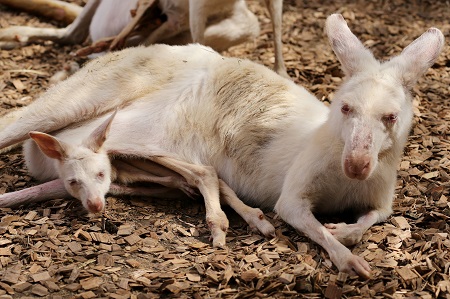
静岡県の富士サファリパークではクマやライオンなどの猛獣に餌をあげることが出来ます。珍しいシロカンガルーもいます。ところでキリンの角は何本ありますか?答えは5本です。2014年8月撮影。


Eastern Grey Kangaroo (albino)
シロカンガルー (アルビノ)
Eastern Grey Kangaroo (albino)

Black panther
黒ヒョウ
Black panther

American bison
アメリカバイソン
American bison

Fuji Safari Park

Google map

”Jungle Bus”and Mt. Fuji
Fuji Safari Park

Ride on ”Jungle Bus” and we can feed some animals.
American black bear
アメリカグマ
American black bear
Lion
ライオン
Lion

Cheetah
チーター
Cheetah
Baby cheetah
Baby cheetah
Baby cheetah
Baby cheetah


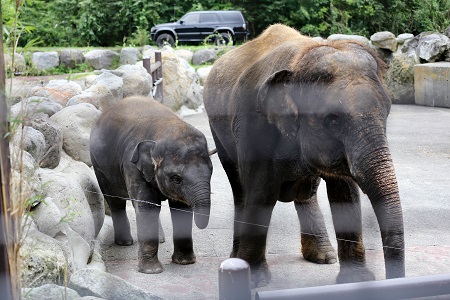
Asian elephant
アジアゾウ
Asian elephant

Southern white rhinoceros
ミナミシロサイ
Southern white rhinoceros

Zebra
シマウマ
Zebra

Reticulated giraffe
アミメキリン
Reticulated giraffe
Do you know that Reticulated giraffe has 5 horns?
Reticulated giraffe

Himalayan tahr
ヒマラヤタール
Himalayan tahr

Himalayan black bear
ヒマラヤグマ
Himalayan black bear


 Safari Navigation Car
You can get a close look at wild animals in one of the Fuji Safari Park ranger's 4WD vehicles equipped with a navigation device. You can also enjoy off-road driving in these vehicles and you can even feed some animals.
 Safari Navigation Car

Lion
ライオン
Lion
Lion
Baby lion
Baby lion


Amur tiger
アムールトラ
Amur tiger
Amur tiger

Blackbuck
ブラックバック
Blackbuck

Llama
ラマ
Llama

Eland
エランド
Eland

Fallow deer
ダマジカ
Fallow deer

Grey Wagtail
キセキレイ
Grey Wagtail

It takes 50 minutes from Mishima Station to Fuji Safari Park by bus.
Shinkansen
Shinkansen


Japanese foods are good and safe.
Because of stricter food safety law by Japanese government, we have no worry about foods.


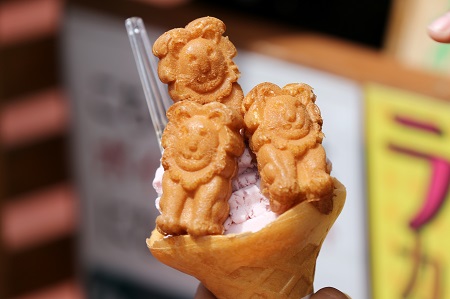
Lion ice ; Ice cream topped with Lion shaped sponge cakes
ライオンアイス
Lion ice

Lion Omelet with rice ; a Japanese-style rice omelet.
ライオンオムライス
Lion Omelet with rice

Hamburger
hamburger

Animal shaped bread
動物パン
Animal shaped bread

Aji sushi ; horse mackerel sushi
鯵寿司
Aji sushi

Tenmusu ; rice ball which filling is fried shrimp.
Tenmusu


 About 3 and a half years have passed since Fukushima Daiichi nuclear power plant accident. I have visited various places of Japan to see the health consequence of the accident.
 Fortunately I have never found any impacts by the accident among Japanese creatures. As far as I know, nobody has health problem which is caused by the accident in Japan.
 Our Prime Minister Abe assures that "The situation is under control and there will never be health problems." He also said that "Tokyo is 250 kilometers away from Fukushima, and the kind of danger that you imagine does not exist in Tokyo. Tokyo is a very safe city."
 Shizuoka prefecture is very far away from Fukushima as same as Tokyo and people in Shizuoka have no concern about the nuclear power plant accident. People in Shizuoka prefecture have already forgotten the accident, because it is very far away from Fukushima and radioactive materials cannot reach there.
 We know there is no problem for child birth and child rearing in Shizuoka. So people in Shizuoka are living without any concern about the accident.
 I continue to visit various places in Japan to see the effects of the accident, because I can meet various creatures which are more sensitive to radioactive materials from the environment. It is important to see their health for our safety.


Public Health Network in Japan
公衆衛生ネットワーク
Public Health Network in Japan