ラベル Garden の投稿を表示しています。 すべての投稿を表示

2015年5月26日火曜日

Biological monitoring in Tokyo, Japan (May 26, 2015)

Biological monitoring at Botan Park of Ueno Toshogu shrine in Tokyo, Japan

 I visited Botan Park (Peony Garden) of Ueno Toshogu shrine in Tokyo to see biological impacts of Fukushima No.1 nuclear power plant accident. Though I have visited various places in Japan to see the health consequences of the accident, I have never found any effect against creatures in Japan.
 Toshogu means “light of the east” and refers to 200 shrines build across Japan to enshrine the deified spirit of Tokugawa Ieyasu, the founder and first shogun of the Tokugawa shogunate, which ruled Japan from 1603-1868.
 The Ueno Toshogu was said to have been created for the convenience of the Daimyo who, at the time, were required to spend 6 months in Edo and expected to pay their respects to Tokugawa Ieyasu. Daimyo was a title given to the top lords of the Tokugawa period. So, in Winter and Spring you can experience the tranquil beauty of the Botan Park (Peony Garden) of Ueno Toshogu shrine.
 Generally speaking, plant's growth is so fast than human beings that they are more sensitive to radioactive materials of the environment than us. So I visited Botan Park of Ueno Toshogu to see effects of the accident against creatures which are grown up by Japanese food and water. 
 Fortunately, I could see them grown up safely and I couldn't find any impact of the accident. It seems that there is no problem for childbirth and child-rearing in Tokyo Japan.
Posted by Yoshitaka Kiriake from Japan on May 26, 2015.


東京都台東区の上野東照宮ぼたん苑では春になるとボタン祭りが開催され、様々な品種のぼたんを鑑賞することが出来ます。今年も綺麗なボタンを見ることが出来ました。近くにある不忍池ではカワセミやダイサギが魚を捕っていました。


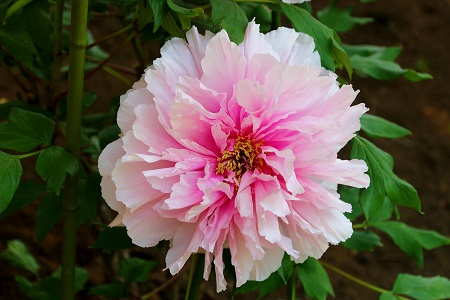
Peony
Peony
Peonies are originally from China and have been used in herbal medicine for centuries. In this peony garden you can find many kinds of blooms.


Peony Garden is near the Shinobazu Pond where we can see many beautiful birds eating river fish.

カワセミ
Common Kingfisher
Alcedo atthis
Alcedo atthis
ダイサギ
Great Egret
Great Egret
カワセミとダイサギは東京都台東区の不忍池で撮影
Google map


These pictures were taken on April, 2015.


Ueno Toshogu Shrine
Ueno Toshogu Shrine
 Ueno Toshogu Shrine, in Ueno Park, Taito-ku, Tokyo, underwent major renovation in 1651 by order of the third shogun Tokugawa Iemitsu. The heavily gilded and splendid main building is also known as the shrine of gold. Having survived the calamities such as wars and earthquakes that followed and retained its features from the Edo period, the precious structure is designated a Cultural Property of Japan.


Google map
About Ueno Toshogu shrine


Peony
Peony
Peony


Peony Garden
Peony Garden
Peony Garden

Five‐storied pagoda
Five‐storied pagoda

Peony Garden
Peony Garden
Peony Garden
Peony Garden
Peony Garden
Peony Garden
Peony Garden

Peony
Peony
Peony
Peony
Peony
Peony
Peony
Peony
Peony
Peony
Peony
Peony
Peony

Japanese foods are good and safe.
Because of stricter food safety law by Japanese government, we have no worry about foods.

Matcha ; powdered green tea
Matcha

Amazake ; a sweet drink made from fermented rice
Dango ; Three Colored Dumplings
Amazake and Dango

Kashipan ; sweet bread


 About 4 years have passed since Fukushima Daiichi nuclear power plant accident. I have visited various places of Japan to see the health consequence of the accident.
 Fortunately I have never found any impacts by the accident among Japanese creatures. As far as I know, nobody has health problem which is caused by the accident in Japan.
 Our Prime Minister Abe assures that "The situation is under control. The influence of the contaminated water is completely blocked within Fukushima. There are no health-related problems until now and there will never be health problems." He also said that "Tokyo is 250 kilometers away from Fukushima, and the kind of danger that you imagine does not exist in Tokyo. Tokyo is a very safe city."
 As PM Abe said, Tokyo is very far away from Fukushima, people in Tokyo have no concern about the nuclear power plant accident. People in Tokyo have already forgotten the accident, because they think radioactive materials cannot reach there.
 We know there is no problem for childbirth and child rearing in Tokyo. So people in Tokyo are living without any concern about the accident.
 I continue to visit various places in Japan to see the effects of the accident, because I can meet various creatures which are more sensitive to radioactive materials from the environment. It is important to see their health for our safety.


Public Health Network in Japan
公衆衛生ネットワーク
Public Health Network in Japan

2014年3月7日金曜日

Biological monitoring in Tokyo (March 7, 2014)

Biological monitoring at Shinjuku Gyoen National Garden, Tokyo Japan


 I visited Shinjuku Gyoen National Garden to see biological impacts of Fukushima No.1 nuclear power plant accident. Though I have visited various places in Japan to see the health consequences of the accident, I have never found any effect against creatures in Japan.
 Shinjuku Gyoen National Garden was constructed on the site of a private mansion belonging to Lord Naito, a "daimyo"(feudal lord) of the Edo era. Completed in 1906 as an imperial garden, it was re-designated as a national garden after the Second World War and opened to the public. With 58.3 ha(144 acres) in size and a circumference of 3.5 km, it blends three distinct styles, French Formal Garden, English Landscape Garden and Japanese Traditional Garden, and is considered to be one of the most important gardens from the Meiji era. Everybody can enjoy seeing various flowers and creatures which are living there too.
 Generally speaking, plant's and animal's growths are so fast than human beings that they are more sensitive to radioactive materials of the environment than us.
 So I visited Shinjuku Gyoen National Garden to see effects of the accident against creatures which are grown up by Japanese food and water. Fortunately, I could see them grown up safely and I couldn't find any impact of the accident. It seems that there is no problem for childbirth and child-rearing in Tokyo Japan.
Posted by Yoshitaka Kiriake from Japan on March 7, 2014.


東京の新宿御苑では蝋梅、梅、サザンカ、椿、福寿草などの花々が春の訪れを告げている。トラツグミ、ヤマガラ、コゲラ、シジュウカラ、ダイサギ、ハクセキレイ、メジロ、アオサギ、ハシブトガラス等を観察できた。平成26年2月16日撮影


White's Thrush
White's Thrush
Varied Tit
Varied Tit
Japanese Pygmy Woodpecker


About Shinjuku Gyoen
Google map
Shinjuku Gyoen
Shinjuku Gyoen
Shinjuku Gyoen
Shinjuku Gyoen
Shinjuku Gyoen
Shinjuku Gyoen
Chimonanthus praecox
Ume : Prunus mume
Ume blossom
Ume blossom
 Camellia sasanqua
 Camellia sasanqua
Camellia x hiemalis
Camellia x hiemalis
Adonis amurensis
Adonis amurensis
Japanese Tit
Japanese Tit
Great Egret
Great Egret
White wagtail
White wagtail
Japanese white-eye
Japanese white-eye
Grey Heron
Grey Heron
Jungle Crow
Jungle Crow

 
Japanese foods are good and safe.
Because of stricter food safety law by Japanese government, we have no worry about foods.
 
 
Cake
Cake
Waffles
Waffles
Sushi
Sushi
sweet pastry
sweet pastry
sweet pastry


 About 3 years have passed since Fukushima Daiichi nuclear power plant accident. I have visited various places of Japan to see the health consequence of the accident.
Fortunately I have never found any impacts by the accident among Japanese creatures. As far as I know, nobody has health problem which is caused by the accident in Japan.
 Our Prime Minister Abe assures that "The situation is under control. The influence of the contaminated water is completely blocked within Fukushima. There are no health-related problems until now and there will never be health problems." He also said that "Tokyo is 250 kilometers away from Fukushima, and the kind of danger that you imagine does not exist in Tokyo. Tokyo is a very safe city."
 As PM Abe said, Tokyo is very far away from Fukushima, people in Tokyo have no concern about the nuclear power plant accident. People in Tokyo have already forgotten the accident, because they think radioactive materials cannot reach there. We know there is no problem for child birth and child rearing in Tokyo. So people in Tokyo are living without any concern about the accident.
 I continue to visit various places in Japan to see the effects of the accident, because I can meet various creatures which are more sensitive to radioactive materials from the environment. It is important to see their health for our safety.


Public Health Network in Japan
公衆衛生ネットワーク
Public Health Network in Japan