2013年10月8日火曜日

Biological monitoring in Tokyo (October 8, 2013)

Biological monitoring at SHINAGAWA AQUARIUM

I visited SHINAGAWA AQUARIUM to see biological impacts of Fukushima No.1 nuclear power plant accident. Though I have visited various places in Japan to see the health consequence of the accident, I have never found any effect against creatures in Japan.

SHINAGAWA AQUARIUM shows that a waterfall cascades into a mountain stream, becomes a river, and then flows into the Tokyo Bay. You will be able to observe these recreated scenes, the tidal flats and rocky shores of the Tokyo Bay, and the creatures that inhabit them. We can see not only Japanese creatures but also those of the world. There is also a stadium where you can enjoy dolphin shows and sea lion shows.

So I visited SHINAGAWA AQUARIUM to see effects of the accident against marine creatures which are grown up by Japanese food and water.
Fortunately, I could see them grown up safely and I couldn't find any impact of the accident. It seems that there is no problem for childbirth and child-rearing in Tokyo Japan.
Posted by Yoshitaka Kiriake from Japan on October 8, 2013.


品川水族館は主に東京の川と海辺の水生生物を展示している。氷の妖精と呼ばれるオホーツク海のクリオネや水面上の餌を打ち落とす鉄砲魚のショーを見ることができた。


Sea angel (Clione limacina)
Sea angel lives in the Sea of Okhotsk, northern sea of Hokkaido prefecture.
Sea angel (Clione limacina)


About SHINAGAWA AQUARIUM
Google Maps
SHINAGAWA AQUARIUM is located in Shinagawa, Tokyo.
SHINAGAWA AQUARIUM
SHINAGAWA AQUARIUM
SHINAGAWA AQUARIUM
 
 
 Japanese char
Japanese char
Pale chub
Pale chub
Japanese Freshwater Crab
Rainbow trout
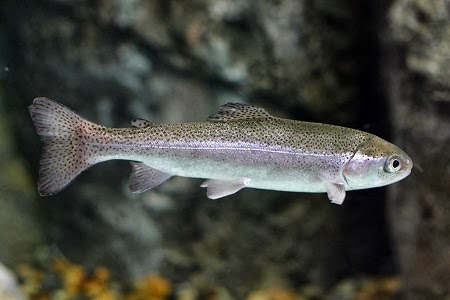
Rainbow trout
 Musashitomiyo : Musashi ninespine stickleback
It is a small fish and endangered species.
Musashitomiyo
 Japanese sea perch
Japanese sea perch
Cherry bass
Cherry bass
Fox-face
Fox-face
 Orange anemone fish
Orange anemone fish
Orangestrip prawn goby
White Socks
White Socks
Shrimp Fish
Shrimp Fish
Purple blotch basslet
Bluestreak fusilier
Bluestreak fusilier
Triggerfish
Triggerfish
Redtooth triggerfish
 
 Archer fish 
(鉄砲魚)
Archer fish
 
Ornate cowfish
Ornate cowfish
 Old wife
Old wife
Elephant-Nose Fish
Elephant-Nose Fish
 Arapaima
Arapaima
Leaf Fish
Leaf Fish
Natterer's Piranha
Natterer's Piranha
 
Dolphins show us fine performance.
Dolphin
Dolphins eat Japanese fish.
Dolphin
 
 Magellanic Penguin
Magellanic Penguin
 
Swallowtail butterfly
swallowtail butterfly
I saw many butterflies in Tokyo this year and I couldn’t see any deformity or abnormality.


2 and half years have passed since Fukushima Daiichi nuclear power plant accident. I have visited various places of Japan to see the health consequence of the accident.

Fortunately I have never found any impacts by the accident among Japanese creatures. As far as I know, nobody has health problem which is caused by the accident in Japan.
 
Our Prime Minister Abe assures that "the situation is under control" and "there will never be health problems."  He also said that "Tokyo is 250 kilometers away from Fukushima, and the kind of danger that you imagine does not exist in Tokyo. Tokyo is a very safe city."
 
As Tokyo is very far away from Fukushima, people in Tokyo have no concern about the nuclear power plant accident. People in Tokyo have already forgotten the accident, because it is very far away from the site and radioactive materials cannot reach there.

 
We know there is no problem for child birth and child rearing in Tokyo. So people in Tokyo are living without any concern about the accident.

I continue to visit various places in Japan to see the effects of the accident, because I can meet various creatures which are more sensitive to radioactive materials from the environment. It is important to see their health for our safety.


Public Health Network in Japan
公衆衛生ネットワーク
Public Health Network in Japan


2013年10月4日金曜日

Biological monitoring in Kyoto (October 4, 2013)

Biological monitoring at Kyoto City Zoo

 I visited Kyoto City Zoo to see biological impacts of Fukushima No.1 nuclear power plant accident. Though I have visited various places in Japan to see the health consequence of the accident, I have never found any effect against creatures in Japan.
 Kyoto City Zoo is located in Okazaki Park. Within its spacious grounds are 700 animals, representing of more than 170 species. There are also a library, which has movies and books about animals, and game facilities. There are many cherry trees within the grounds, where visitors can enjoy each of the four seasons.
 So I visited Kyoto City Zoo to see effects of the accident against marine creatures which are grown up by Japanese foods and water.
 Fortunately, I could see them grown up safely and I couldn't find any impact of the accident. It seems that there is no problem for childbirth and child-rearing in Kyoto Japan.
Posted by Yoshitaka Kiriake from Japan on October 4, 2013.


京都市動物園では今年生まれたマンドリルの赤ちゃんを見ることが出来た。ゴリラの子供も無事に成長していた。夜行性のショウガラゴはとても可愛かった。


ショウガラゴ
How cute Senegal Galago is!
They are nocturnal animals.
Senegal Galago
Senegal Galago


Mandrill
New baby was born on July 27, 2013
Mandrill
 
About Kyoto City Zoo
Google Map
Kyoto City Zoo


A baby Mandrill is cute too.
Mandrill
Mandrill

Gorilla
Gorilla
Gorilla
He was born on November 12, 2011
He is growing up safely.


Ring-tailed Lemur
Ring-tailed Lemur
Rhesus Monkey
Rhesus Monkey
Amur Tiger
Amur Tiger
Jaguar
Jaguar
Lion
Lion
Styan's Red Panda
Styan's Red Panda
Giraffe
Giraffe
Hippopotamus
Hippopotamus
Meerkat
Meerkat
Chicken
Chicken
Guinea Pig
Guinea Pig
Pig
Pig
Humboldt's Penguin
Humboldt's Penguin
Green Tree Python
Green Tree Python
Indian Flying Fox
Indian Flying Fox
Green and Black Poison Frog


There are many World Heritages in Kyoto.

This is Kinkaku (The Golden Pavilion) / Rokuon-ji Temple
Kinkaku-ji
 Kinkaku (The Golden Pavilion) is a shariden, a Buddhist hall containing relics of Budda. The garden and buildings, centered on the Golden Pavilion, were said to represent the Pure Land of Buddha in this world.
 About Kinkaku-ji
Google map


The Rock Garden
Ryoanji
This is The Rock Garden at Ryoanji temple.
The rectangular Zen garden is completely different from the gorgeous gardens of court nobles constructed in the Middle Ages. No trees are to be seen; only fifteen rocks and white gravel are used in the garden.  This internationally famous rock garden was said to be created at the end of Muromachi Period (around 1500), by a highly respected Zen monk, Tokuho Zenketsu. 

 “Tsukibai”
 A unique wash-basin of stone.
Tsukibai
Tsukubai, the stone wash-basin for the tea room, has a unique inscription, “I learn only to be contented.” He who learns only to be contented is spiritually rich, while the one who does not learn to be contented is spiritually poor even if he is materially wealthy. This concept is important in the Zen spirit. You can see it at Ryoanji.
About Ryoanji
Google map


Welcome to KYOTO

The 17 properties of the World Heritage Sites

The 17 properties of the World Heritage Sites are located in Kyoto Prefecture. These heritage sites are attracting many people since each embodies a respective era in which it was constructed.
Kyoto map


It takes 2 hours from Tokyo to Kyoto by Shinkansen.
Shinkansen
Shinkansen @KYOTO station


 2 and a half years have passed since Fukushima Daiichi nuclear power plant accident. I have visited various places of Japan to see the health consequence of the accident.
 Fortunately I have never found any impacts by the accident among Japanese creatures. As far as I know, nobody has health problem which is caused by the accident in Japan.
 Our Prime Minister Abe assures that "the situation is under control" and "there will never be health problems."
 As Kyoto is very far away from Fukushima nuclear power plant, people in Kyoto have no concern about the nuclear power plant accident. People in Kyoto have already forgotten the accident, because it is very far away from the site and radioactive materials cannot reach there.
 We know there is no problem for child birth and child rearing in Kyoto. So people in Kyoto are living without any concern about the accident.
 I continue to visit various places in Japan to see the effects of the accident, because I can meet various creatures which are more sensitive to radioactive materials from the environment. It is important to see their health for our safety.


Public Health Network in Japan